Tesla’s FSD Subscription Count Soars, But Definition Masks Cash Flow
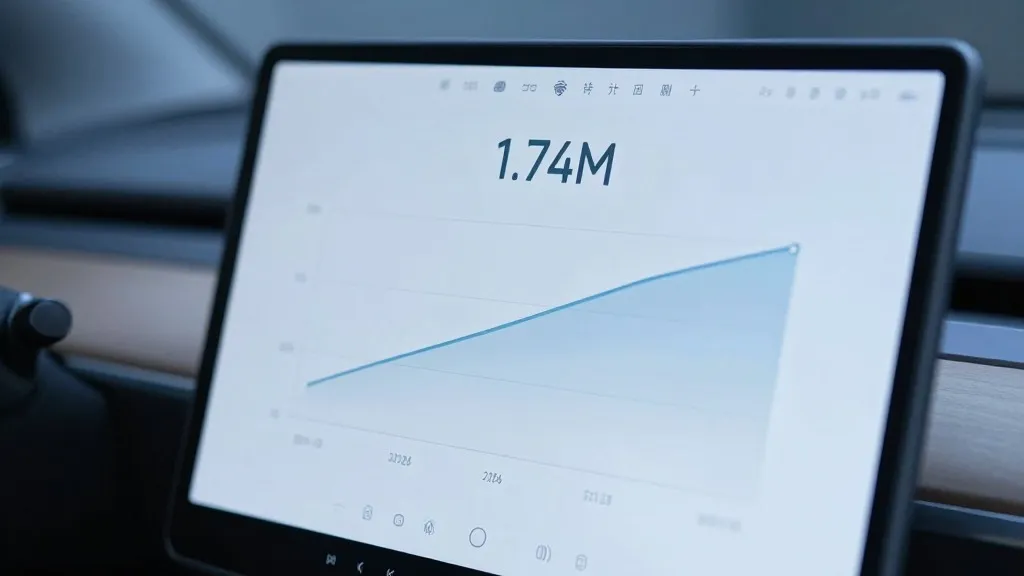
Tesla reports 1.74 million FSD users by including upfront buyers, a metric structure that aligns with executive compensation targets rather than recurring revenue.
By Aever Bundji ·
The intersection of software monetization and executive incentive structures has become a focal point for equity analysts tracking Tesla’s quarterly performance. The company’s latest reporting reveals how accounting definitions can reshape the perception of growth in its autonomous driving division.
Tesla disclosed this week that it has reached 1.74 million active Full Self-Driving (FSD) subscriptions, a figure that represents a 67 percent year-over-year increase. The data is drawn from the company’s Q3 2026 shareholder letter, where a specific footnote clarifies the methodology used to arrive at this total.
Three critical elements define the current state of this metric and its implications for the market. First, the count includes owners who purchased the software as a one-time purchase, not just those paying monthly fees. Second, the definition is explicitly tied to the 2025 CEO Performance Award, suggesting the metric was designed to facilitate compensation milestones. Third, Tesla does not disclose the number of customers who are actually paying the recurring monthly fee, leaving a gap in the revenue visibility for investors.
Under the reported definition, the 1.74 million figure aggregates both upfront purchasers and monthly subscribers. Tesla ceased selling FSD as a standalone, one-time purchase on February 14, 2026. Since that date, new customers in the United States have been required to subscribe at a rate of $99 per month. However, every owner who paid the upfront cost prior to that cutoff, with prices having reached up to $15,000, remains included in the active subscription count for as long as their vehicle is operational. The only category excluded from this total is free trials.
This accounting method is not an industry standard for software-as-a-service metrics; it is a specific construct aligned with the 2025 CEO Performance Award. One of the key operational milestones for Elon Musk to earn his compensation package is reaching 10 million active FSD subscriptions. By counting legacy upfront buyers as active subscribers, the company accelerates its progress toward this target. This is particularly significant because a substantial portion of these users were originally sold the promise of unsupervised self-driving capabilities, a feature Tesla has not yet fully delivered to the mass market.
The same definitional approach appears in other parts of the shareholder letter. Tesla’s cumulative delivery figure now stands at 10.2 million. This number includes any unsupervised Robotaxis placed into commercial operation, a calculation that mirrors the pay package’s 20 million vehicle delivery milestone. Furthermore, Tesla reports that more than 75 percent of new deliveries in North America during Q3 included FSD subscriptions, a sequential increase of nearly 20 percentage points. While Tesla claims this high attach rate is driving demand, the letter does not define whether this includes introductory offers or how many of those buyers continue paying after the initial period.
Looking at the trajectory toward the 10 million target, the pace of growth offers mixed signals. Tesla added 260,000 net FSD subscriptions in Q3, its highest quarterly gain to date. If the company maintains this specific quarterly velocity, it would require approximately eight years to reach the 10 million mark. However, looking at the average growth over the last 12 months, which is roughly 700,000 per year, the timeline extends to closer to 12 years. The compensation award remains active until 2035, providing a long runway for these targets to be met, though only one of the 12 tranches was considered probable as of June 30.
For investors, the distinction between a software license and a recurring subscription is material. While counting upfront buyers is not inherently incorrect, presenting the aggregate as a measure of subscription momentum may obscure the underlying cash flow dynamics. The board has established this definition, and executive compensation is directly linked to it. Until Tesla provides a breakdown of how many of the 1.74 million users are paying the $99 monthly fee, the true scale of the recurring revenue engine remains partially opaque.
The 75 percent attach rate in North America remains a strong indicator of consumer interest, assuming retention holds steady. If a significant portion of new buyers maintain their subscriptions, the business model gains substantial weight. However, without data on retention rates from previous quarters, it is difficult to assess the long-term viability of the subscription segment versus the legacy upfront cohort. The market will likely continue to scrutinize this metric in future quarters to determine if the growth is driven by new recurring revenue or the accumulation of historical sales.
Source: Electrek