Fremont Line Shifts To Humanoid Robots
Tesla replaces its legacy car assembly with a high-volume robot production line, aiming for massive annual output.
By Mariana Delgado ·
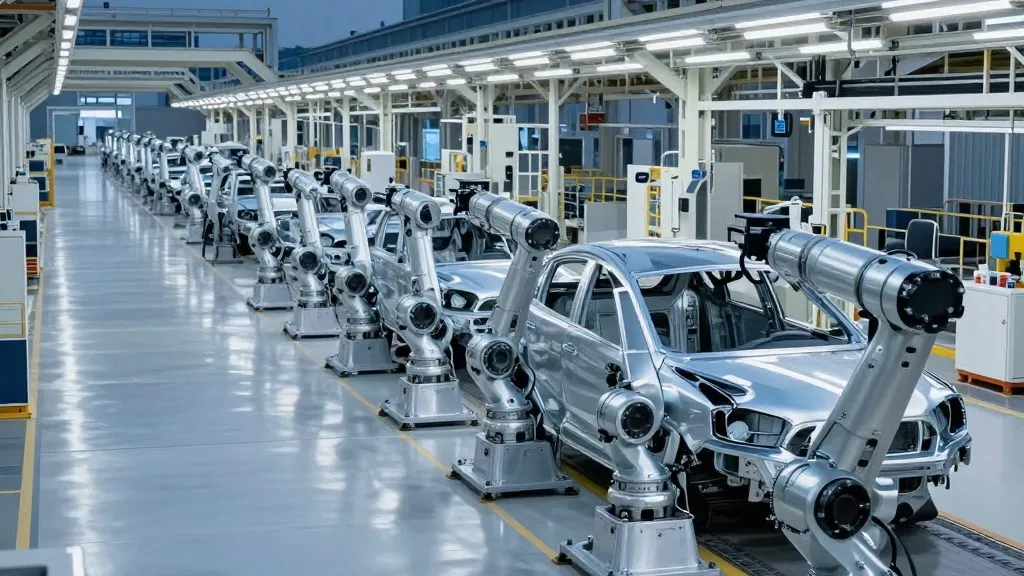
For the first time, Tesla is producing humanoid robots on an industrial scale, marking a shift from prototype testing to mass manufacturing. The company confirmed that the units rolling off the line in Fremont are the first to meet production-quality standards, signaling a move toward commercial viability for its Optimus platform.
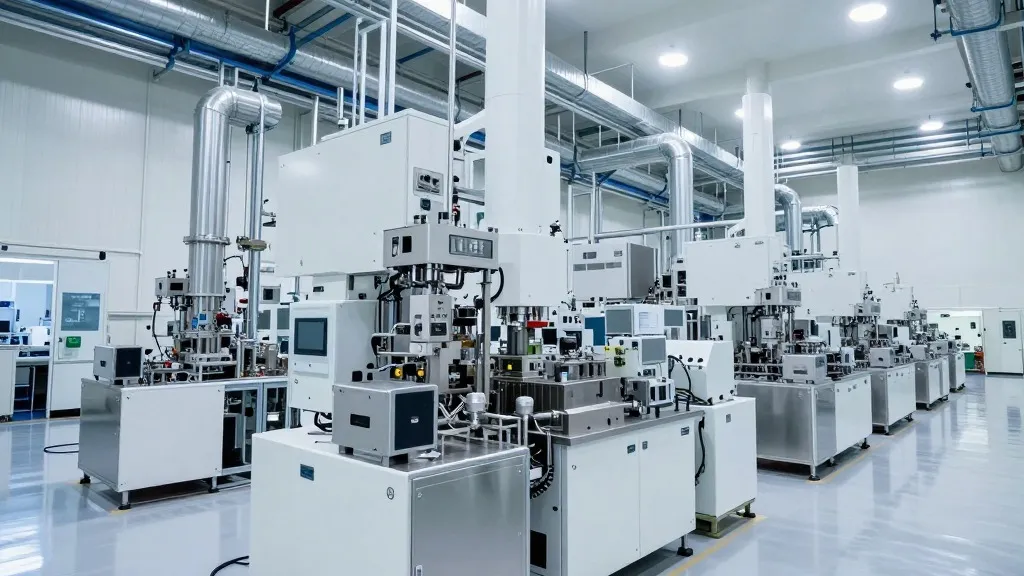
The transition occurred in the spring, when Tesla cleared the Model S and Model X assembly space in 46 days to install equipment capable of handling one million units annually. According to the company’s third-quarter shareholder letter, this process has been proven suitable for a commercial product. Currently, the majority of the necessary equipment for this capacity is already installed in the Fremont facility.
Elon Musk outlined the production trajectory during Wednesday’s earnings call, describing the ramp-up as a classic S-curve with an initially shallow slope. He expects output to increase steadily, reaching approximately 20,000 robots per week as the line reaches full operational capacity. This phased approach allows the engineering team to refine reliability and service life while scaling production.
The core of the project involves a unique training methodology dubbed the Optimus Academy. Unlike Tesla’s vehicle fleet, which generates training data from millions of active cars, Optimus lacks a comparable fleet for real-world data collection. To bridge this gap, Tesla will deploy 10,000 to 20,000 robots to practice various tasks. The data generated by these units will be fed back into the AI model, improving the performance of subsequent versions.
Musk noted that this approach addresses the primary difference between automotive AI and humanoid robot development. While cars benefit from existing fleet data, the robots must generate their own learning environment. Every unit produced in Fremont serves as a data point, creating a continuous feedback loop that enhances the electromechanical design and AI capabilities of the platform.
Hardware upgrades are also scheduled for the coming year. Tesla plans to integrate its AI5 chip into the Optimus units, which should enhance processing power. Musk indicated that a new video demonstrating AI-driven tasks, rather than preprogrammed motions, is expected within one to two months. This development aims to distinguish the technology from rival demos that rely on scripted routines.
The supply chain is preparing for this expansion. In September, Tesla certified Tuopu, Joyson, and Sanhua as mass production partners for critical components. Meanwhile, a larger dedicated facility is under construction at Giga Texas, where drone footage reveals the steel frame nearing completion. The long-term target for this Texas plant is set at 10 million robots per year.
Executives stated that production costs for Optimus are trending toward the expected manufacturing costs of the Cybercab, indicating that the robot is being engineered for volume from the outset. However, the hand design remains the most challenging aspect of the engineering. Significant effort is currently focused on solving the complexities of the hands, a difficulty Musk highlighted at a recent event. The company plans to begin delivering units to external companies for dangerous and repetitive jobs by the end of next year.
Source: Teslarati