Tesla Owners Will Only Drive Unsupervised in Robotaxi Zones by Mid-2027
Tesla has narrowed its unsupervised FSD rollout to specific urban areas, meaning drivers will not have free roam capability across the country.
By Mei Ling ·
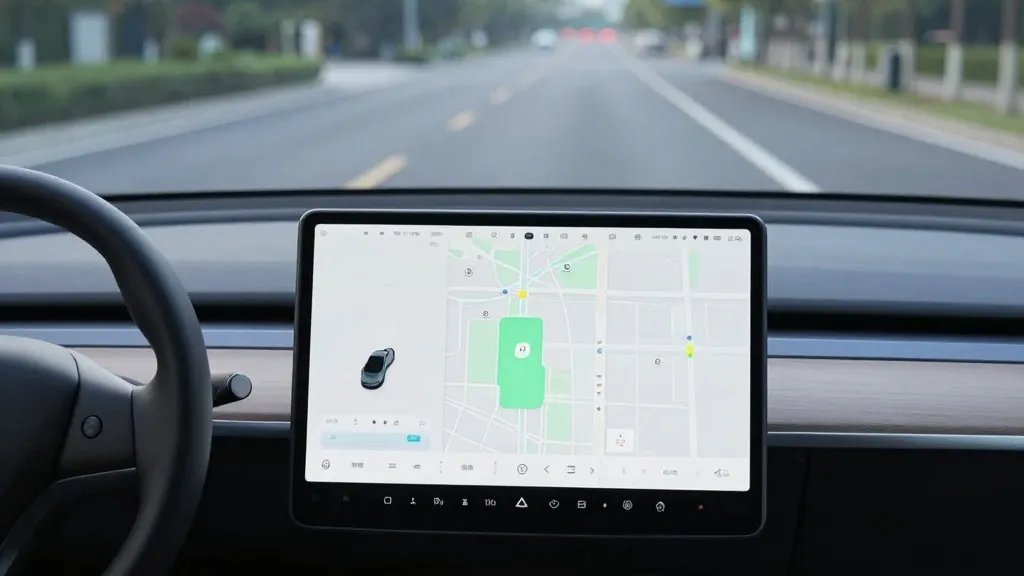
Drivers in the Pacific Northwest and other regions should not expect to hop into their vehicles and sleep on the way to work anytime soon. Tesla has clarified that unsupervised Full Self-Driving for customer-owned cars will arrive in the second quarter of 2027. However, the feature will only function within the specific geographic areas where Tesla already operates its managed Robotaxi service. This means the technology will not initially allow owners to travel anywhere they please, a significant limitation for those who bought the software expecting a universal solution.
The company outlined these details during its Q3 2026 earnings call. Ashok Elluswamy, Tesla’s chief of AI, explained that the upcoming update allows owners to add their personal vehicles to Tesla’s managed fleet. He described the system as a way for owners to plug their cars into the existing network rather than a standalone software upgrade that grants complete freedom of movement. The unsupervised driving capability is strictly tied to the zones where Tesla’s own Robotaxi operations are active.
This approach contrasts sharply with the long-standing marketing narrative. For nearly a decade, investors and customers have been told that a future software update would enable their cars to drive themselves anywhere. During a July 2025 investor call, Elon Musk stated that unsupervised FSD would be available for personal use by the end of that year in certain geographies. A year prior, he expressed surprise if the technology was not ready the following year. Now, the target date has shifted to mid-2027, and the scope of the feature has narrowed considerably.
The current operational footprint is limited. Tesla’s Robotaxi service currently runs in six US metropolitan areas, but the service areas cover only small slices of those cities. In Miami, the zone primarily includes West Miami and a strip extending toward Doral and Sweetwater. Orlando and Tampa launched in July with similarly small geofences. Within these boundaries, the vehicles stick to low-speed routes, largely avoid highways, and skip the more complex parts of town to maintain safety.
Regulatory hurdles further complicate the rollout, particularly in California. In the Bay Area, the service is not yet unsupervised because state rules require a safety driver in every car. Tesla has not released data to the California DMV, a step required for autonomous systems beyond level 2. This regulatory stance prevents Tesla from matching the pace of competitors like Waymo, which already operates in both Orlando and Tampa. Waymo has logged over 3 million miles, whereas Tesla reported nearly 2 million cumulative unsupervised miles by the end of Q3, a month after the Cybercab joined the Austin fleet.
The physical fleet size remains modest compared to past promises. Third-party tracking this spring indicated that only dozens of fully driverless Teslas were on the road, far fewer than the hundreds of thousands Musk had previously discussed. For owners of vehicles with the HW3 computer hardware, the situation is even more restrictive, as their systems cannot run unsupervised FSD at all, and no clear upgrade plan has been announced.
For the average buyer, the stakes are high. The promise has shifted from a car that drives you anywhere to a car that can work as a Robotaxi inside a small, controlled geofence. This eliminates the prospect of unsupervised highway road trips or commuting across town unless both home and work are located within one of these limited zones. Elluswamy noted that safety remains the primary bottleneck, and while he guesses these issues will be resolved by next year, the company admits it is still refining the system.
Tesla’s decision to limit unsupervised driving to its own zones reflects a cautious approach to scaling. By integrating customer cars into its managed fleet, the company can maintain tighter control over operations and data. For Pacific Northwest drivers, this means waiting for Tesla to expand its Robotaxi map into the region before they can fully benefit from the unsupervised feature. Until then, the technology remains a niche service rather than a universal capability for all FSD subscribers.
Source: Electrek