Federal Proposal Sets Cyan Light for Robotaxis
Regulators seek to standardize a specific marker lamp for vehicles operated by autonomous driving systems.
By Ama Boateng ·
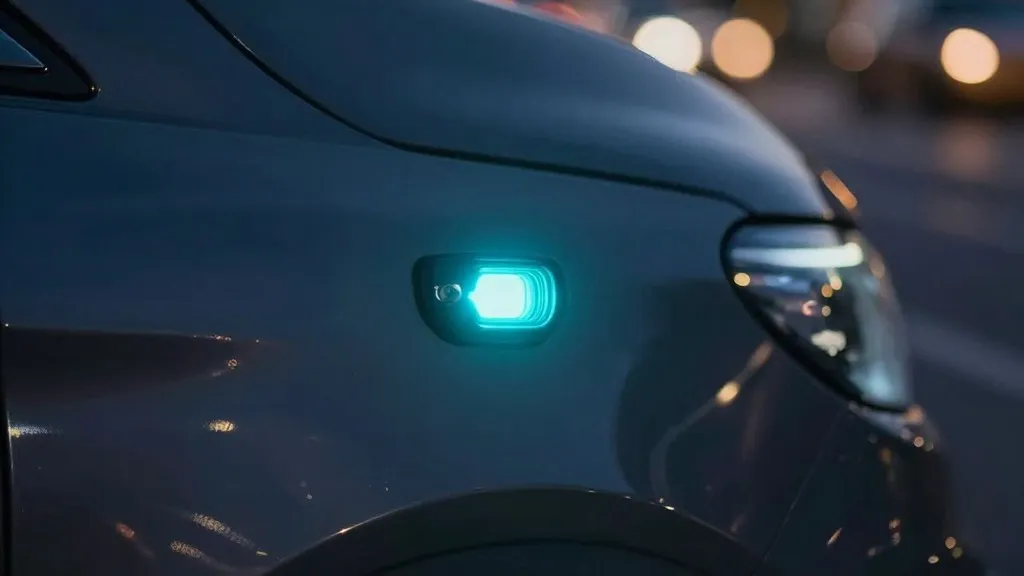
Federal regulators have proposed a new rule to standardize the use of specific lighting on autonomous vehicles.
The National Highway Traffic Safety Administration (NHTSA) announced proposed changes to Federal Motor Vehicle Safety Standard (FMVSS) No. 108, which governs vehicle lighting. The proposal outlines a uniform method for vehicles to signal that an automated driving system is operating the vehicle.
As part of the proposal, NHTSA suggests the use of cyan-colored marker lamps. This specific shade of blue-green would be used to clearly and consistently indicate to law enforcement and other road users that no human is in control of the vehicle. The agency noted that other colors like red, amber, white, and flashing blue/red are already designated for functions such as brakes, turn signals, headlights, and emergency vehicles. The proposed rule aims to create a federal standard for the color, brightness, and location of such lamps to ensure uniformity. While the use of these marker lights would be optional for manufacturers, any that choose to install them must adhere to the proposed federal specifications.
In addition to the new lighting standard, the proposal seeks to remove several requirements that would not apply to a vehicle without a human driver. NHTSA is proposing to eliminate mandates for physical hazard switches, manual beam shifters, and interior turn levers. The agency is also considering removing rules that dictate the vertical placement of high-beam and low-beam lights. Furthermore, the proposal would update the 12.8-volt testing standard to accommodate modern LED lighting systems.
This regulatory action is part of a broader initiative by the Department of Transportation to streamline the deployment of autonomous vehicles. The goal is to facilitate the creation of vehicles that do not require traditional human-operated controls such as a steering wheel and pedals.
While proposing these changes, regulators continue to enforce existing standards. In September, NHTSA opened an audit query into the Tesla Cybercab. The inquiry examines the process and technical data Tesla used to certify the vehicle and its lack of certain required features, including sideview mirrors, pedals, and a steering wheel. The agency seeks to understand how the company certified the Cybercab despite these omissions from current FMVSS requirements.
The agency's proposal would establish a national standard that companies such as Waymo, Nuro, Zoox, General Motors, and Mercedes-Benz could adopt uniformly. The move follows prior state-level approvals for similar lighting on Mercedes-Benz's Level 3 Drive Pilot system, though the automaker has since discontinued that program in favor of a different system.
This proposal is open for public comment before NHTSA makes a final determination on the rule.
Source: The Verge