Apple Retired the iPod. Its 2001 Debut Changed How We Listen.
A look back at the 25th anniversary of a device that put thousands of songs into a pocket-sized player.
By Ken Adams ·
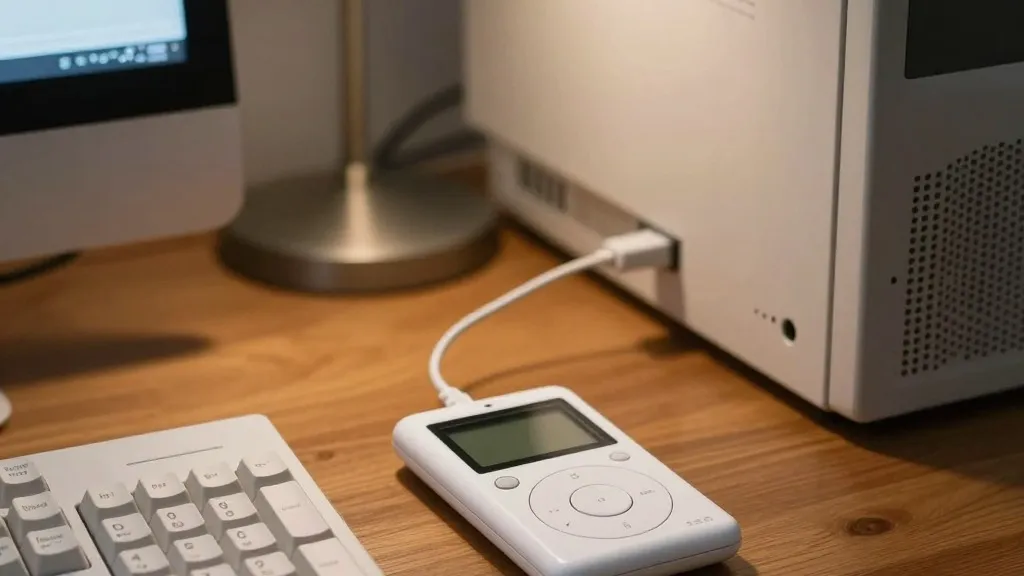
Twenty-five years ago, Apple put a device on stage that aimed to solve a common problem. It was a small gadget designed to carry thousands of songs. The product was the iPod, and it became a favorite for many people. It remained a popular item to carry around until smartphones could handle music in the same way. The iPod is no longer sold. Apple stopped making the last version, an iPod Touch, in May 2022. The final model of that line was released in May 2019.
Apple CEO Steve Jobs unveiled the iPod on October 23, 2001. He began his talk by calling it a breakthrough device for people who don't use a Mac computer. The iPod was a portable music player. It could store 1,000 songs on its 5 gigabyte hard drive. The price for this pocket-sized library was $399. The device was the size of a deck of cards. It measured 2.4 by 4 by 0.78 inches and weighed 6.5 ounces.
At the time, Apple was having a difficult period. The dot-com bubble had recently burst. The company was trying to move past beige computers. It was focusing on new products like iBooks and iMacs. Apple was trying to recover its position in the market. Jobs said at the event that a computer could be the center of a person's digital life. He saw the iPod as a tool to help with that goal.
Jobs said other companies were selling digital music players. Some examples were Creative and Sonic Blue. Sony was also a large company in this area. He said that no one had yet found the recipe for digital music. Apple chose to build a player with a hard drive for storage. The iPod could play CD-quality sound. It supported formats like MP3, WAV, and AIFF. The device could hold 1,000 typical pop songs.
The iPod had a feature for fast file transfers. It used a FireWire 400 cable. This connection could move a full CD to the device in 5 to 10 seconds. Apple said that filling the entire iPod would take about 10 minutes. A USB device would have needed about five hours for the same task. The device also had a lithium-polymer battery. This battery provided 10 hours of continuous music playback. It could reach 80% charge in one hour.
Apple designed the iPod for simple use. It had controls for one hand. The scroll wheel was designed for fast use. It had a piezoelectric clicker that gave a clicking sound. This allowed for quick location of music by playlist, artist, or song. The device was also built to work with Apple's software. It could connect to a computer to transfer files or charge.
The first iPhone was released over five years later, in early 2007. Both the iPhone and iPod were sold by Apple for more than a decade. The iPod was designed to work with iTunes. This software was released on the same day as the iPod. iTunes 2 could burn MP3 CDs. It could also sync with the new music player. The iPod could also work as a FireWire hard drive.
The iPod is no longer a product. Its time as a main device for music is over. The iPhone is now the primary way people listen to music. Apple stopped making the final iPod Touch in May 2019. The product line was not updated after that. Apple officially discontinued it in May 2022. The device that put a music library in a pocket is now a piece of history.
Source: Tom's Hardware